
BP’s CEO shake-up could pave way to mega merger
LONDON, Dec 18 (Reuters) – The surprise appointment of Meg O’Neill as BP’s first outsider CEO offers the bruised $90 billion British oil company three clear strategic choices for moving forward: build, buy or be bought.
Sign up here.
The leadership overhaul is the clearest signal yet that BP Chair Albert Manifold, who himself took office on October 1, intends to fundamentally overhaul the long-struggling oil company.
The shake-up follows three tumultuous years for the 116-year-old energy firm that saw leadership changes, the overhaul of a failed renewables strategy, activist investor pressure and swirling rumours that the company would soon be acquired.
“Progress has been made in recent years, but increased rigor and diligence are required to make the necessary transformative changes to maximise value for our shareholders,” Manifold said in a statement on Wednesday.
A DREAM JOB?
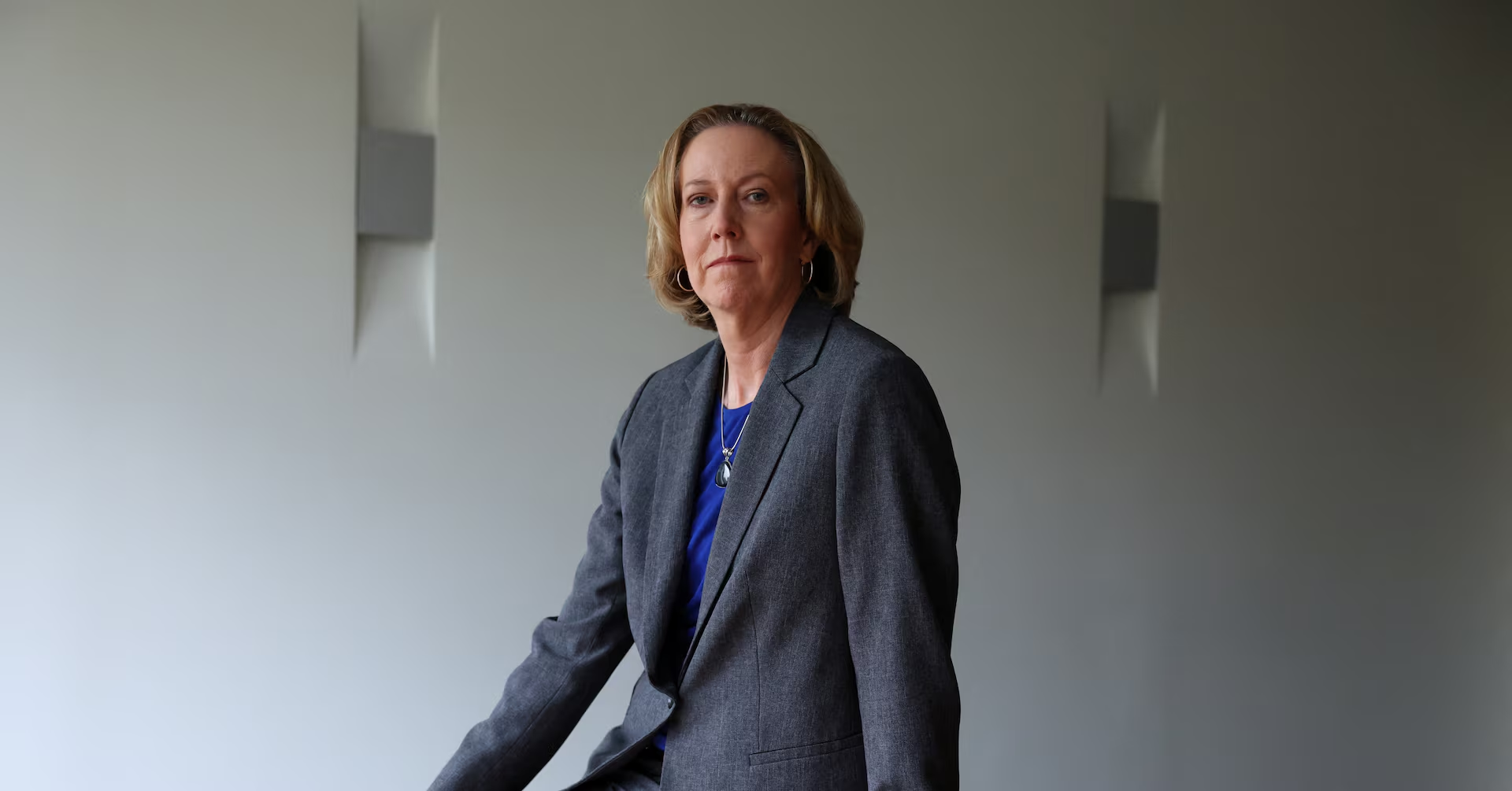
O’Neill, a U.S. citizen, will not only become BP’s first outsider CEO but also the first woman to lead a Western oil major. She oversaw Woodside’s expansion in recent years into a larger player in the liquefied natural gas space.
Taking the helm of BP is a job on an entirely different scale, however.
Auchincloss became CEO in January 2024 following the shock resignation of Bernard Looney in September 2023 for lying to the board about personal relationships with employees.
And the company, which pumped 2.36 million barrels of oil equivalent per day (boepd) in 2024, now aims to bump that up slightly to between 2.3 million and 2.5 million boepd by 2030.
These changes appear to have gone down well with investors.
O’Neill thus inherits a company moving in the right direction.
But she will now be tasked with further improving BP’s operational and financial performance under the supervision of Manifold, who seems to be far more involved in the daily running of the company than his recent predecessors.
The safest bet for O’Neill would probably be to continue growing BP’s upstream division by diverting more cash to the business to develop production or acquire assets. The company currently plans to spend around $10 billion in oil and gas out of a total capital expenditure budget of $13 billion to $15 billion per year between 2025 and 2027.
She will also likely stick to or go beyond her predecessor’s plans to make $20 billion in divestments between 2025 and 2027 in order to slash BP’s heavy debt burden.
Forecasts of weakening oil prices next year amid surging global supplies will complicate O’Neill’s task, however.

BETTER IS RISKIER
Ironically, the better BP performs in the coming year, the more uncertain its future becomes.
To be sure, acquiring the British energy major would be a hugely costly and complex transaction that would require lengthy regulatory approvals and massive disposals. Integrating the firm would also likely take years, with many bumps along the way.
But with the industry’s growing confidence that oil and gas demand will remain robust for decades despite the energy transition, consolidation has become more attractive, as it offers companies an opportunity to grow scale and reduce operational costs.
The recent growth and success of BP’s upstream portfolio therefore makes it an attractive prospect for a rival – such as Shell – seeking to grow its near and long-term oil and gas production.
The appointment of O’Neill is a signal that BP’s board wants to keep fighting for the company’s future after three bruising years. Their success may nevertheless place it squarely in the sights of acquisitive rivals.
Ron Bousso; Editing by Jamie Freed
Our Standards: The Thomson Reuters Trust Principles.
Opinions expressed are those of the author. They do not reflect the views of Reuters News, which, under the Trust Principles, is committed to integrity, independence, and freedom from bias.